Act I
Same Shore
Act II
Wrong Shore
Act III
No Shore
The Trilogy — a discussion
Three songs from one day on St. George Island
On April 12, 2026, the community of St. George Island gathered to mark 250 years of history on this shore. One song became three. Each one pulls at a different thread of the same story.
Act I
Same Shore
Act II
Wrong Shore
Act III
No Shore
The Trilogy — a discussion
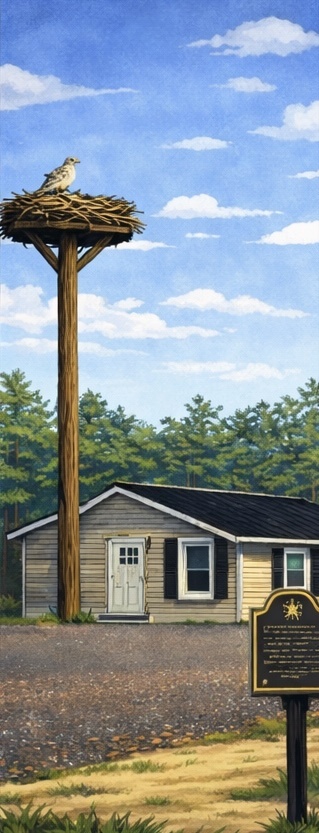
Act I — Remembrance
The view from now, looking back
Words & Music
They came up the Potomac with broken masts, in need
Looking for fresh water and timber from our trees
But the islanders knew every sand bar, bend and creek
Standing between the ships and home
For this ground was not for free
We’re still standing on the same shore
Same river, same salt, same sky
The ones who show up saying this matters
The way they showed up that July
We set the chairs on common ground, the river running wide
Red cloth resting on the bronze, with history inside
Coats from seventeen seventy-six stood watching near the shore
And osprey on the pole above
Had seen it all before
We’re still standing on the same shore
Same river, same salt, same sky
The ones who show up saying this matters
The way they showed up that July
Volunteers and visionaries, side by side
Every heart, every hand, every mind
The Daughters drove a stake in the ground today
Two hundred fifty years, and we mark the line
We’re still standing on the same shore
Same river, same salt, same sky
We put a marker in the ground today
So no one walks past asking why
Same shore... same island
This song was written on April 12, 2026 — the same day it describes. I started it the moment I arrived at the community center on St. George Island, and I kept writing between events, between conversations, between moments I didn’t want to forget.
Every detail in the lyric came from what I saw. The chairs really were set on a parking lot, but when I looked around at who was sitting in them, all I could see was common ground. The red cloth was draped over the DAR marker before the unveiling. The re-enactors in their 1776 coats really were standing at the edge of the crowd, watching. And there really was an osprey on the pole above us — a bird whose kind has known this shore for millennia, long before watermen, long before the British, long before any of us.
As I listened to the song take shape, I realized I didn’t want to write a battle anthem. The islanders who stood here in 1776 weren’t soldiers looking for glory. They were families: watermen and farmers who stood between the ships and home. That felt like the truest thing I could say about them, and about us.
This event was a collaboration that included the St. George Island Improvement Association, the Daughters of the American Revolution, and many visionaries and volunteers who gave their hearts, hands, and minds to make it happen. The Daughters drove a stake in the ground — a bronze marker on the same shore where island families once stood — so no one walks past asking why.
Same shore. Same island.
“Same Shore” is written and performed as a colonial folk ballad — the musical language of the era it honors. The arrangement is built around the dulcimer, fiddle, penny whistle, and fingerpicked acoustic guitar, instruments that would have been heard on these same shores in 1776. This was a deliberate choice: if the song is about the unbroken line between then and now, the music itself should carry that thread.
The verse structure moves between two time periods — 1776 and 2026 — without announcing the shift. Verse 1 tells the historical account; Verse 2 places the listener at the dedication ceremony. The chorus belongs to both centuries, with “the ones who show up” bridging the islanders who stood their ground and the volunteers who organized this event 250 years later.
The bridge widens the lens to honor the collaboration behind the day, and the final chorus plants the song’s purpose in the ground alongside the marker: remembrance.
The outro — “Same shore... same island” — is the song’s quietest and most definitive moment. The dulcimer carries the final note alone, the way the island carries the story forward.
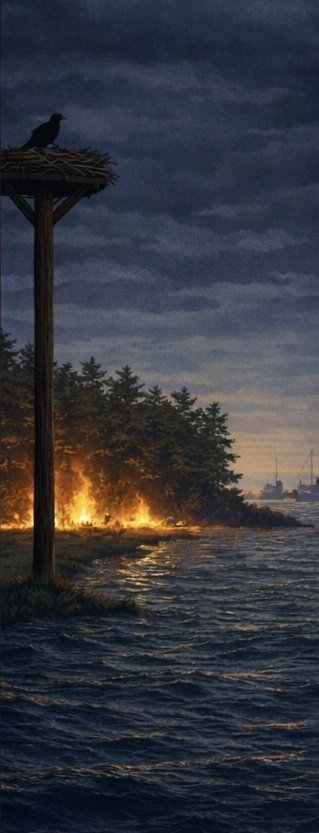
Act II — Resolve
The view from the bushes along the waterline
Words & Music
Well his Lordship sailed up the Potomac
With his tail between his fleet
Seventy ships and half of ’em leaking
And the other half asleep
He said “I need some water, boys,
And timber, nice and cheap”
So he pointed at our island
Like a fox let loose on sheep
Oh you picked the wrong island, Lord Dunmore
We don’t bow and we don’t kneel
We know every creek and sand bar
And we’re not part of your deal
You can keep your crown and fancy coat
Your Lordship, if you please
But you ain’t getting water
And you ain’t getting trees
Now he wasn’t here for glory
And he wasn’t here for war
He just needed fresh water
And some timber from our shore
But a Governor who’s lost his house
His city and his name
Doesn’t get to pick our island
Like he’s playing some kind of game
Oh you picked the wrong island, Lord Dunmore
We don’t bow and we don’t kneel
We know every creek and sand bar
And we’re not part of your deal
You can keep your crown and fancy coat
Your Lordship, if you please
But you ain’t getting water
And you ain’t getting trees
We know these creeks like the backs of our hands
We’ve fished ’em since we were boys
And when his boats came rowing in
We made a little noise
Not the kind that wanted blood, mind
Just the kind that says “go home”
This island’s not for landing
This island’s not your own
Oh you picked the wrong island, Lord Dunmore
We don’t bow and we don’t kneel
We know every creek and sand bar
And our hearts are made of steel
You can keep your crown and fancy coat
Your Lordship, if you please
You ain’t getting water
You ain’t getting trees
And he didn’t.
This is the song the islanders would have sung that night.
After the boats turned back and the smoke cleared, after the adrenaline wore off and someone opened a jug — this is what it would have sounded like in a room full of watermen who’d just told the Royal Governor of Virginia to leave.
The history is real. Lord Dunmore arrived at St. George Island in July 1776 with a fleet of seventy ships, riddled with smallpox, desperate for fresh water and timber. He’d already burned Norfolk, been chased from Gwynn’s Island, and spent months living on ships after fleeing Williamsburg. By the time he pointed at this island, he had lost his governorship, his city, and his reputation. He thought a small island at the mouth of the Potomac would be easy.
He was wrong.
“Wrong Shore” tells that story from the inside — not as history but as a tavern song, the way the people who lived it would have retold it over drinks. It’s cheeky, not violent. Resolute, not vengeful. These were families who knew every sand bar and creek bend, and they simply refused. The humor isn’t cruelty — it’s the laughter of people who know exactly where they stand.
The title is the second in a trilogy. “Same Shore” honors the ground. “Wrong Shore” defends it. And the third song tells you what happens to a man who has no shore left at all.
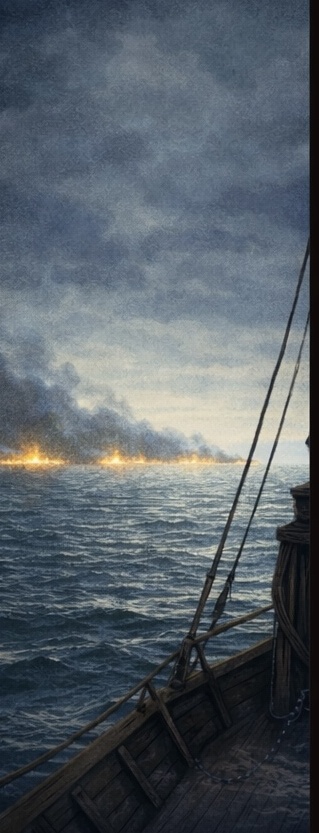
Act III — Ruin
The view from the water
Words & Music
The river is a ribbon of silver and ash
And I am a King with nae crown
Seventy shadows of timber and rope
Wait for the sun to go down
My men are all burning with fever and salt
And the casks in the hold have run dry
I reached for the green of Saint George bonnie woods
And they answered with lead from the sky
Oh, the land is a lover who turned her back
The shore is a wall made of stone
I’m a Governor ruling a kingdom of waves
And I’ve ne’er been quite so alone
The water is sweet just a mile away
But it might as well be the moon
I’m sailing away on a Potomac tide
And I’m losing my kingdom too soon
I promised them freedom, I promised them gold
I’m giving nothing but smallpox and pain
I see the fires of the isle’s rebel camps
And they burn like a brand in my brain
They think they have won by the grit of their pride
They think they have guarded the gate
But if I cannot drink from the well of this land
Then I’ll fill up my spirit with hate
Oh, the land is a lover who turned her back
The shore is a wall made of stone
I’m a Governor ruling a kingdom of waves
And I’ve ne’er been quite so alone
The water is sweet just a mile away
But it might as well be the moon
I’m sailing away on a Potomac tide
And I’m losing my kingdom too soon
Bring the torches to the rail
Let the red reflection fly
If they will not give us water
Let them pour it out lest their harvest die
Oh, the land is a lover who turned her back
So I’ll leave her a widow in black
I’m a Governor ruling a kingdom of smoke
And I’m never, nae never, coming back
The water was sweet just a mile away
But the horizon is screaming in red
I’m leaving this shore to the fire and the wind
And I’m leaving them ashes instead
Let it burn.
I didn’t expect to write this song. The first two came from the event — one born in real time at the dedication, the other from the defiant spirit of the islanders who fought here. But after the day was over, I kept thinking about the man on the ship.
John Murray, 4th Earl of Dunmore, was a Scottish aristocrat who joined a failed rebellion at fifteen, married a woman who crossed a winter ocean to be with him, and lost her again eighteen months later when he fled to a warship. He was a man who kept reaching for things — power, land, loyalty — and watching them slip away. By the time he anchored off St. George Island, he had burned Norfolk, been chased from every shore in Virginia, and was governing nothing but a floating colony of smallpox and desperation.
“No Shore” lets him tell his own story. It is not sympathetic — but it is human. The central metaphor, “the land is a lover who turned her back,” isn’t just poetry. It’s characterization. Dunmore was a man who left his wife pregnant across an ocean, who was chased from every place he tried to govern, who reached for land and power the way some people reach for love — possessively, and with the same willingness to destroy what he couldn’t hold. The metaphor darkens across the song — a lover becomes a widow, a kingdom of waves becomes a kingdom of smoke — until the only thing left is the order to burn what he couldn’t hold.
The music mirrors the collapse. What begins as a Celtic lament — cello, dulcimer, a weary Scottish voice — builds into something aggressive and dissonant. The bridge is the turning point: the moment self-pity becomes destruction. And the final two words, “Let it burn,” are spoken, not sung — because by then, there’s nothing musical left in him.
Dunmore burned the houses, fields, and woods of St. George Island before he left. He split his fleet — half to Bermuda, half to New York — and never came back.
This song is the third in a trilogy. “Same Shore” plants a marker in the ground. “Wrong Shore” tells him to leave. “No Shore” is what it sounds like when a man has nowhere left to go — and decides to make sure no one else does either.
The Trilogy
These three songs were born from a single day — April 12, 2026 — when the community of St. George Island gathered to mark the 250th anniversary of important Maryland events. What began as one song written in real time between events became three, each pulling at a different thread of the same story.
The shore is the constant. It doesn’t move. It doesn’t change sides. It simply exists, the way land does, and everything that matters in these songs happens in relationship to it — who claims it, who defends it, who loses it.
“Same Shore” is the view from now, looking back. Current islanders singing across 250 years to the ones who stood here first, recognizing themselves in the same instinct to show up. The song moves between 1776 and 2026 without announcing the shift because the whole point is that there is no shift. The dulcimer and fiddle carry the music because they are the instruments these shores have always known. The song ends with a marker going into the ground — an act of remembrance that roots the story to the place where it happened.
“Wrong Shore” is the view from the bushes along the waterline. It’s the islanders’ version, told the way stories get told after the danger passes — over drinks, with swagger and laughter. Dunmore arrives with seventy ships and the islanders aren’t impressed; they’re almost amused. The tavern singalong form is deliberate — this is oral history as it actually travels, not through textbooks but through songs that make people lean in and slap the table. The humor isn’t disrespect. It’s the confidence of people who know their own ground.
“No Shore” is the view from the water. It inverts everything. The same events, the same island — but seen from the deck of a failing ship by a man who has lost every shore he ever stood on. The lover metaphor that runs through the song isn’t a poetic device. It’s characterization. Dunmore was a man who left his wife pregnant across an ocean, who was chased from every place he tried to govern, who reached for land and power the way some people reach for love — possessively, and with the same willingness to destroy what he couldn’t hold. The music collapses alongside him, from Celtic lament to scorched-earth dissonance, until there’s nothing left but a spoken command and silence.
The three songs share a spine: each outro is spoken, not sung, delivering its truth in the silence after the music stops. “Same Shore” ends with “Same shore... same island” — quiet, certain, rooted. “Wrong Shore” ends with “And he didn’t” — a punchline, a wink. “No Shore” ends with “Let it burn” — a command, a wound. The pattern is the same. The temperature moves from warmth to humor to devastation.
Together, the trilogy asks a question the island has been answering for 250 years: What does it mean to belong to a place? “Same Shore” says you show up. “Wrong Shore” says you protect it. “No Shore” says that without a place to stand, a person can lose everything — including themselves.
Same shore. Wrong shore. No shore.
The Shore Trilogy tells one story from three positions — the shore, the bushes, and the water — but the lyrics don’t just share a setting. They pass words, images, and ideas back and forth like a conversation across centuries.
Water and timber. The most basic human needs drive all three songs. In “Same Shore,” they arrive as historical fact: “Looking for fresh water and timber from our trees.” In “Wrong Shore,” the islanders throw those same words back as a taunt: “You ain’t getting water and you ain’t getting trees.” In “No Shore,” Dunmore reaches for them and can’t grasp them: “The casks in the hold have run dry” and “The water is sweet just a mile away / But it might as well be the moon.” The same two resources move from narration to refusal to obsession.
The Potomac. All three songs name the river, but it flows in different directions. In “Same Shore,” the British come up it: “They came up the Potomac with broken masts, in need.” In “Wrong Shore,” the islanders watch the same arrival with mockery: “Well his Lordship sailed up the Potomac.” In “No Shore,” the river reverses — Dunmore is leaving: “I’m sailing away on a Potomac tide.” The river carries the story forward, then carries the man away.
Seventy ships. “Wrong Shore” sees them from the outside: “Seventy ships and half of ’em leaking / And the other half asleep.” “No Shore” sees them from the inside: “Seventy shadows of timber and rope.” The same fleet — one version is a punchline, the other is a ghost story.
Shore as identity. The word “shore” transforms across the trilogy. In “Same Shore,” it’s home: “We’re still standing on the same shore.” In “Wrong Shore,” it’s a boundary: “This island’s not for landing.” In “No Shore,” it becomes a wall: “The shore is a wall made of stone.” For the islanders, the shore is where they belong. For Dunmore, it’s what rejects him.
Home. The word appears once in “Same Shore” — “Standing between the ships and home” — as the thing worth protecting. It reappears in “Wrong Shore” as a command: “Just the kind that says go home.” In “No Shore,” the word is completely absent. Dunmore never says it because he no longer has one. He rules “a kingdom of waves,” then “a kingdom of smoke” — kingdoms made of things that can’t be held.
Ground. “Same Shore” returns to the ground again and again: “this ground was not for free,” “common ground,” “a stake in the ground,” “a marker in the ground.” The community is constantly planting, rooting, anchoring. In “No Shore,” there is no ground. Dunmore exists entirely on water. The contrast is the trilogy’s deepest argument — belonging means having ground beneath your feet.
Knowing the land. The islanders’ power comes from intimacy with the terrain. “Same Shore” introduces it: “the islanders knew every sand bar, bend and creek.” “Wrong Shore” repeats and deepens it: “We know every creek and sand bar” and “We know these creeks like the backs of our hands / We’ve fished ’em since we were boys.” In “No Shore,” this knowledge is completely absent — Dunmore doesn’t know the sand bars, the creeks, the tides. He reaches for “Saint George bonnie woods” and gets “lead from the sky.” The land is a stranger to him, and that is why it refuses him.
Fire. Fire is absent from “Same Shore” — that song is about light, not burning. It enters quietly in “Wrong Shore” through implication. Then “No Shore” becomes consumed by it: “fires of the isle’s rebel camps,” “burn like a brand in my brain,” “torches to the rail,” “red reflection fly,” “fire and the wind,” and finally “Let it burn.” The fire grows across the trilogy the way Dunmore’s desperation grows — from nothing to everything.
The spoken endings. Each song stops singing and starts speaking at the most important moment. “Same shore... same island” is a whisper — the kind of thing you say to yourself standing on familiar ground. “And he didn’t” is a voice across a tavern table, dry and satisfied. “Let it burn” is an order issued to no one, from a man who has lost the right to command anything. The three spoken moments move from intimacy to wit to isolation.
What the songs never share. “Same Shore” never mentions Dunmore by name. “Wrong Shore” names him in every chorus but never grants him dignity. “No Shore” never mentions the islanders by name — they are “they,” a faceless force that refused him. Each song withholds something from the other side, and that withholding is its own kind of statement about whose story this is.